
Overcoming Skill Shortages: A Financial Blueprint for Workforce Stability
- James Isaacs

- Apr 1, 2025
- 4 min read
Updated: May 6

Introduction
Skill shortages in industries like arboriculture are often dismissed as simple wage issues. However, experience and broader economic analysis reveal that incremental wage increases alone rarely resolve persistent shortages. Workers today seek not only competitive wages but also stability and a pathway to long-term financial security. Historically, structured career paths and reliable employment conditions encouraged individuals to invest in their trades and build expertise. While we need not replicate past systems entirely, the core lesson remains: when skilled workers feel valued and secure, they are more likely to commit to their roles, strengthening the industry as a whole.
Yet, addressing skill shortages requires more than simple pay adjustments. The financial landscape in which businesses operate has shifted significantly due to systemic liquidity injections, market distortions, and rising asset prices. As a result, many skilled workers find themselves increasingly drawn away from stable employment and toward necessity-driven entrepreneurship, not because of genuine business opportunities but as an attempt to escape deteriorating labor conditions. This article explores how financial mechanisms influence skill shortages and why alternative savings and investment tools, such as Bitcoin, may offer workers a path to greater stability.
Liquidity, Inflation, and the Erosion of Wage Stability
Modern financial policies, particularly those aimed at stimulating economic activity, often involve large-scale liquidity injections that filter unevenly through the economy. While such measures are intended to promote growth, their effects on wages and skilled labor markets can be deeply problematic. Rather than translating into higher real earnings, these interventions often inflate asset prices, leaving wage earners struggling to keep pace with rising living costs.
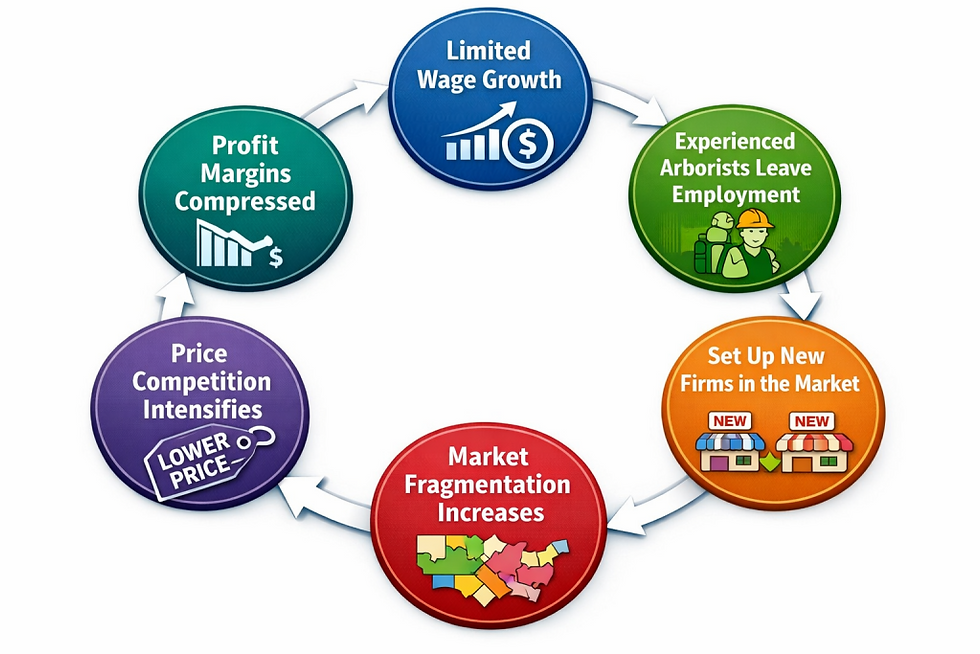
A key consequence of this dynamic is that homeownership—a traditional anchor of financial security—moves further out of reach for skilled tradespeople. When housing prices escalate faster than wages, workers are compelled to seek alternative means of financial security. For many, this means leaving employment for self-employment, not out of ambition, but out of necessity. This transition, while offering short-term control over earnings, often results in an oversaturated market where businesses undercut one another, suppressing wages and undermining overall industry stability.
Necessity-Driven Entrepreneurship and Market Fragmentation
The academic term for this behaviour is termed necessity entrepreneurship—a situation where individuals turn to self-employment not because of an abundance of opportunities, but as a reaction to declining wage stability and increasing living costs. This phenomenon is particularly visible in trades like arboriculture, where the abundance of small firms creates excessive competition, leading to further wage suppression and unstable career paths.
Key concerns include:
Market Fragmentation: The proliferation of small firms leads to intense competition, reducing overall profitability and discouraging investment in skills training and career development.
Precarious Self-Employment: Without structural support, necessity-driven entrepreneurs often find themselves in a cycle of financial uncertainty, lacking benefits, long-term career prospects, and the ability to scale their businesses effectively.
Industry Instability: The continual exit of skilled workers from structured employment into fragmented self-employment weakens the industry’s ability to build and retain a cohesive, experienced workforce.
Bitcoin as a Financial Alternative for Skilled Workers
Bitcoin presents a compelling alternative to necessity-driven entrepreneurship by offering a mechanism for workers to preserve and grow their earnings without resorting to precarious self-employment. In an economic environment where traditional savings are eroded by inflation and rising asset prices, Bitcoin provides a store of value that operates outside of the distortions created by monetary expansion.
A few critical points to consider:
Preservation of Purchasing Power: Unlike traditional currencies, which are subject to inflationary pressures, Bitcoin’s fixed supply ensures that its value is not diluted over time.
Alternative to Real Estate Dependency: Many workers have historically relied on homeownership as a form of wealth accumulation, but escalating prices have made this increasingly unattainable. Bitcoin offers a digital, liquid alternative that allows for long-term value retention. As an asset class it has continued to dramatically outperform real estate since inception.
Encouraging Workforce Stability: With a viable financial alternative, workers may feel less pressure to leave structured employment for self-employment, helping reduce market fragmentation and allowing businesses to offer more competitive wages.
Industry Implications and Potential Strategies
Should financial alternatives like Bitcoin gain wider adoption among skilled laborers, we could see significant changes in workforce dynamics, including:
Higher Wages and Improved Conditions: A more stable workforce could reduce unnecessary competition, allowing established businesses to offer better wages and invest in employee development.
Greater Professionalism: With fewer workers forced into precarious self-employment, structured career paths can be re-established, promoting long-term industry sustainability.
Reduced Financial Risk: A secure, alternative financial strategy would encourage workers to invest in their skills rather than being pressured into speculative investments or unstable business ventures.
To facilitate this transition, several practical steps could be taken:
Bitcoin-Based Payroll Options: Employers could offer workers the ability to allocate a portion of their wages to Bitcoin, similar to retirement savings plans like Kiwisaver, helping them build financial security over time.
Financial Education Initiatives:Both employees and business owners would benefit from targeted education on Bitcoin—not as a speculative tool, but as a mechanism for long-term wealth preservation. Workshops and training sessions could demystify the technology and its practical applications.
Asset Conversion into Bitcoin: Rather than reinvesting solely in depreciating assets such as trucks and machinery, firms might consider downsizing and converting a portion of this capital into Bitcoin. This strategy would help to spread risk while reducing operational demands. Establishing a clear risk management framework for the timing and scale of such conversions would maximise its effectiveness.
Business Reserve Strategies: Companies could allocate a portion of their financial reserves to Bitcoin to hedge against economic uncertainty and enhance financial stability.
Conclusion
Integrating modern financial tools such as Bitcoin into industry strategies is not about speculation but about securing long-term value retention and stability. By offering workers a reliable alternative to necessity-driven entrepreneurship, industries can reduce turnover, foster deeper expertise, and create an environment that encourages professional growth. This approach—blending lessons from past structured employment systems with contemporary financial innovation—can contribute to a more sustainable and professionalized industry landscape.
Ultimately, by addressing the financial pressures that drive skilled workers into precarious self-employment, we can reframe the conversation around skill shortages and workforce retention. The key to this shift lies not only in industry coordination but also in providing individuals with the financial tools to remain in their professions and build lasting, rewarding careers.


Comments